INTERVIEW: OBSIDIAN CHURCH: The Weight of Existence
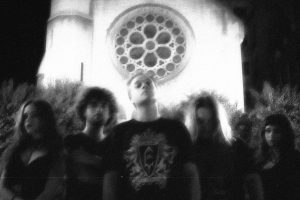
In a world obsessed with productivity, instant gratification, and relentless acceleration, Obsidian Church reclaim the power of slowness, introspection, and mystery. With Stonebound, their debut album, the Sicilian band builds a dark, monumental universe of epic doom where despair, isolation, mortality, and the search for meaning become deeply human experiences. In this interview, Antonio La Camera reflects on the invisible chains that bind us—from social expectations and economic pressures to fear, inherited identities, and the weight of the past—and explores how heavy music can give shape to emotions that contemporary society often encourages us to suppress. Without turning Obsidian Church into a vehicle for explicit political statements, Stonebound nevertheless resonates with a world marked by polarisation, inequality, exhaustion, and an increasingly demanding culture of productivity. The conversation also delves into the tension between tradition and artistic freedom, the importance of keeping the underground open and supportive, and the danger of allowing authenticity to become a rigid set of rules. For Obsidian Church, doom metal is more than a tribute to the past or an exercise in darkness: it is a space for reflection, vulnerability, and resistance, where slowing down becomes a way of reclaiming our inner lives—and where recognising the chains that bind us may be the first step towards freedom.
-Hi! Thanks for taking the time to talk to us. How are you doing, and how has life been for Obsidian Church since Stonebound first started reaching listeners? What has surprised you most about the response to the album so far?
OC: We’re doing well, thanks for asking! It’s been a really exciting period for Obsidian Church. Stonebound means a lot to us, because it’s the result of a lot of work, ideas, and a shared musical vision that we’ve been developing since the band came together. It’s a great feeling to finally have the album out there and to see it finding its way to people beyond our immediate circle.
What has surprised us most is the way people seem to feel the atmosphere of the record, not just the riffs and melodies themselves. We wanted Stonebound to feel heavy and powerful, but also to carry a certain sense of melancholy, mystery, and something almost otherworldly. So it’s rewarding to see that side of the music coming across to listeners.
Having Dying Victims Productions pick up the album for a physical release is another big milestone for us, and it makes the whole experience feel even more real. We’re grateful to everyone who’s taken the time to listen, write about the record, or simply share it with other people. We’re still at the beginning of our journey, but the response so far has been encouraging, and we’re looking forward to seeing where it takes us.
–Stonebound is your debut as Obsidian Church, but it doesn’t feel like a band simply trying to prove it can play traditional doom metal. There’s a strong sense of atmosphere, identity and purpose behind it. What did you want this band to express that you couldn’t quite explore elsewhere?
OC: We love doom metal, of course, and its weight, its riffs, and its sense of melancholy are fundamental to what we do. And we always wanted to recreate a sound that used to be normal in the past!.
With Stonebound, we wanted the music to feel like it had its own world behind it. Something ancient, bleak, and almost ritualistic, where the atmosphere is just as important as the heaviness itself. We wanted the songs to have room to breathe, to build tension, and to create a certain feeling in the listener rather than simply moving from one riff to the next.
I think the name Obsidian Church reflects that idea quite well. There’s something dark and imposing about it, but also something solemn and mysterious. We wanted that same feeling to run through the music, the artwork, and the overall identity of the band.
Ultimately, it wasn’t so much about doing something completely different from what we’ve done elsewhere, but about giving these ideas a place where they could exist together naturally.
-Your sound draws on the monumental riffs and epic melodies of classic doom and heavy metal, yet the goal is to develop an identity of your own. How do you balance your love for the genre’s foundations with the need to avoid becoming prisoners of its traditions? Is there a point where paying tribute to the past starts holding new music back?
OC: We grew up listening to this music, and it’s impossible to separate what we do from the records and bands that shaped our taste. The monumental riffs, the epic melodies, the sense of melancholy and grandeur, these are all elements we genuinely love, and there’s no reason to deny those roots.
At the same time, we believe that influences become interesting when you absorb them and make them part of your own musical language. We’re not interested in sounding traditional simply for the sake of being traditional. If a riff or a melody feels right for a song, we’ll use it. What matters is that the music feels honest and serves the atmosphere we’re trying to create.
With Stonebound, we weren’t trying to reinvent doom metal. We wanted to take the elements that move us most deeply about this music and use them to create something that feels personal. Ultimately, tradition should give you guidance. The past is there to inspire you!
-The songs on Stonebound often unfold patiently, allowing riffs and melodies to build tension rather than rushing towards a payoff. How do you decide when a song needs to breathe and when it needs to hit harder? Does composing doom require a different relationship with time, both as musicians and as listeners?
OC: I think a lot of it comes down to instinct and understanding what a song is trying to communicate. Sometimes a riff has enough weight and character that you don’t need to keep adding things to it. Letting it repeat, with subtle changes or the way you play it, can make it feel increasingly powerful. Other times, you reach a point where the music needs to shift gears, whether that’s through a heavier passage, a change in the rhythm, or a melody that opens everything up. The important thing is that these changes feel natural rather than forced.
With doom metal, repetition can become a very powerful tool. A riff isn’t necessarily there just to carry the song forward; it can also establish a mood and draw the listener deeper into it. If you give it enough time, it can take on an almost hypnotic quality. But that only works if there’s something meaningful at the heart of the music. Playing slowly for the sake of being slow doesn’t automatically create atmosphere or heaviness.
I also think epic doom requires a different relationship with time, both when you’re writing and when you’re listening. As musicians, you have to resist the temptation to fill every space or constantly move towards the next section. Sometimes the space between notes is just as important as the notes themselves. And as a listener, you have to allow the music to unfold at its own pace rather than expecting an immediate payoff.
We’re interested in creating tension and allowing it to develop, because when the music finally reaches a heavier or more melodic moment, it can have a much greater impact. You need the contrast for the release to work. Ultimately, it’s about finding the right balance between patience and intensity. The music should never feel as though it’s in a hurry, but it should always feel as though it’s going somewhere, even when it seems almost motionless.
-The album moves through despair, isolation, mortality and the search for meaning, but there are also moments where darkness seems to reveal a particular kind of beauty. Why are these subjects so compelling to you? Do you approach them as personal experiences, philosophical questions, or ways of making sense of a world that often refuses to make sense?
OC: I think these subjects are compelling because they’re part of the human experience, whether we choose to confront them or not. Despair, isolation, and mortality are things everyone encounters in one way or another. There aren’t always clear answers to these questions, and I think that’s precisely what makes them interesting.
For us, it’s probably a combination of personal feelings, experiences and philosophical questions. You inevitably draw from your own experiences, even when you’re not writing about something explicitly autobiographical. Certain emotions, thoughts, or moments in life find their way into the music almost unconsciously. At the same time, we’re fascinated by the more universal side of these themes: the things that have troubled people for centuries, regardless of the time or place in which they lived.
I also think there’s a particular beauty in darkness, not because suffering is something to glorify, but because confronting difficult things can reveal aspects of life that are otherwise easy to overlook. Melancholy can make you more aware of beauty, just as the awareness of mortality can make existence feel more precious. There’s a strange contrast in that, and I think doom metal is a good medium for exploring it. Its heaviness and atmosphere can express feelings that are difficult to put into ordinary words.
With Stonebound, we didn’t want to present a single philosophy or tell people what they should think or feel, sometimes it’s enough for it to give shape to something you’ve felt but never quite understood, or to remind you that you’re not the only person who’s ever struggled with those questions.
-The title Stonebound suggests being tied to something ancient, heavy and difficult to escape. What kinds of things do you think bind people today? Our past, social expectations, work, money, fear, the identities we inherit? Is there something liberating about recognising those chains, even when we cannot immediately break them?
OC: I think all of those things can bind us in different ways. Some chains are imposed on us by the world we live in, while others are things we gradually build around ourselves, often without even realising it. The expectations of others, the need to make a living, the fear of failure, the weight of our past, or the idea that we have to become a certain kind of person to be accepted. Eventually, it can become difficult to distinguish between what we genuinely want and what we’ve simply learned to believe we want.
Stone suggests something ancient, permanent, and almost impossible to move. It can represent the weight of everything we carry, but it can also represent the foundations upon which we build our lives. The same thing that gives us stability can eventually become a prison. I like ambiguity, because I don’t think things in life always have a simple meaning.
And yes, I believe there’s something liberating about recognising those chains, even when we can’t immediately break them. Awareness doesn’t magically change your circumstances, and some limitations are very real. But recognising them is the beginning of understanding them, rather than simply accepting them as an inevitable part of existence.
In a way, I think that tension runs through the album. We’re all carrying something, and we don’t always know whether we’re choosing to carry it or whether we’ve simply forgotten how to put it down.
-Esotericism, ritual and the idea of hidden layers of reality contribute to the album’s atmosphere. In a world where almost everything is expected to be immediately explained, consumed and turned into content, what attracts you to mystery and the unknown? Is there still value in leaving questions unanswered rather than trying to provide a clear message?
OC: Not everything needs to be immediately explained or reduced to something easily digestible. We’re constantly surrounded by information competing for our attention, and even things that should invite contemplation are often consumed and forgotten within minutes. There’s something valuable about experiences that require patience and imagination.
What attracts us to esotericism and ritual is the idea that ordinary things can hold deeper meanings. Rituals give significance to gestures and actions, while esoteric traditions invite us to look beyond the surface of reality. You don’t necessarily have to subscribe to a particular belief system to find that fascinating.
I think this connects naturally with doom metal. The music can create an atmosphere that communicates something words can’t fully capture. A riff, a melody, or a particular passage can evoke a feeling without defining exactly what it means. That’s part of what makes music so powerful.
-Doom metal often deals with suffering, death and the collapse of hope, but those themes can easily become abstract or theatrical. How do you connect that monumental darkness with the ordinary fears and pressures people experience in everyday life? Can heavy music help us confront uncomfortable realities, or does it sometimes offer a necessary escape from them?
OC: I think the scale of doom metal can make very personal feelings easier to express. Suffering, fear, and mortality might seem abstract when they’re presented through monumental imagery, but they’re things we all encounter in ordinary life. The pressure to keep going when you’re exhausted, the fear of losing someone, or the feeling that circumstances are beyond your control can be just as overwhelming as anything described in a song.
I also think heavy music can serve both purposes: confronting reality and escaping from it. Sometimes you need something that helps you face difficult feelings, while at other times you simply need to step away from everyday life and immerse yourself in another world for a while. I don’t see those things as contradictory. Escapism can be valuable, especially when it gives you the space to return to reality with a different perspective.
I think the best heavy music does more than just express feelings. It creates a space where you can experience those emotions without having to hide from them. With Stonebound, we wanted to explore that darker side of existence without necessarily offering solutions or false reassurance.
-We live in a time of political polarisation, war, growing inequality and a culture that constantly demands productivity while leaving many people exhausted and isolated. Does any of this find its way into the way you think about music, even when your lyrics aren’t explicitly political? Can a record be a form of resistance simply by making room for slowness, reflection and emotions that everyday life encourages us to suppress?
OC: We’ve never felt the need to turn Obsidian Church into a vehicle for direct political statements. I think the themes we explore on Stonebound: isolation, mortality, and the weight of existence, can resonate with people who feel overwhelmed by the world around them, regardless of their background or beliefs.We’re constantly encouraged to be productive, efficient, and available, as though even our free time has to serve a purpose.
I wouldn’t claim that making a slow, heavy record is going to change the world on its own. But music doesn’t necessarily need to offer a political programme to have meaning. Creating space for reflection, vulnerability, and emotions that we’re often expected to suppress is valuable in itself. If Stonebound gives someone a moment to step outside that constant pressure and reconnect with their own thoughts, then I think it has accomplished something worthwhile.
-You come from Sicily, a place with its own history, landscapes, contradictions and cultural identity. Does living and creating music there influence Obsidian Church in ways that might not be obvious to listeners outside Italy? And how important is it for an underground band to develop its own identity and community rather than feeling it must move elsewhere to be taken seriously?
OC: Honestly, I don’t think Sicily has a direct influence on the music we make with Obsidian Church. We’re not trying to represent a particular place or incorporate local cultural elements into our sound. Our influences come primarily from the music we listen to, the ideas we’re interested in, and the kind of atmosphere we want to create. I think those things matter much more to our identity as a band than our geographical origins. (and I’m half bulgarian too)
As for the underground, I think developing your own identity and building connections with like-minded people is essential, wherever you happen to live. Being based away from the main centres of the metal scene can sometimes make things more difficult, particularly when it comes to playing live and meeting other bands, but the internet and the international underground make it possible to reach listeners far beyond your immediate surroundings.
What matters is the music itself, the commitment behind it, and the relationships you build with people who genuinely connect with what you’re doing. With Stonebound, we’re grateful to everyone who’s helped the album reach a wider audience, and we hope to keep building on that.
-As a new band working within a genre with such a long history, you’re entering an underground that can be incredibly passionate but also quite attached to its own rules. What do you think makes a scene genuinely welcoming and alive? How can we preserve the knowledge and dedication of older generations without turning tradition into a test that every new band has to pass?
OC: I think the underground should be about the music first and foremost. People get into this world because they love heavy music, and that passion should be what brings them together. It shouldn’t become a competition over who knows the most obscure bands or who’s following the rules most faithfully.
I have a lot of respect for the people who’ve kept this music alive over the years. Without them, a lot of great music would have been forgotten. Every band should have the freedom to develop its own identity rather than worry about whether everyone else considers it authentic enough.
Tradition is important and it should be something that inspires you!
I think a healthy scene is one where people support each other, exchange ideas, and discover new bands. You don’t have to like everything, and nobody should expect you to. But there’s a difference between having strong opinions about music and trying to dictate what other people are allowed to create.
With Obsidian Church, we’re making the music we want to hear, music that we like! And that’s really the only honest approach we can take. We’re not here to satisfy somebody else’s expectations of what doom metal or epic doom should be.
-Thanks again for your time and for sharing Stonebound with us. What would you like listeners to carry with them after the final notes fade away? And finally, any last words for our readers?
OC: I think the most important thing is for people to take something personal from the album. We all have different experiences, different struggles, and different ways of looking at the world. If Stonebound makes someone stop and think, or helps them connect with feelings they haven’t been able to express themselves, then we’ve accomplished something meaningful.
For me, music should be more than just entertainment. It should give you something to think about, something you can return to and discover new things over time. We’re not trying to tell people what to believe or provide answers to questions that might not have easy answers. We simply want to create music that we genuinely love and believe in.
As for the readers, explore music beyond what’s immediately familiar to you, and don’t be afraid to think for yourself. There’s so much great music out there waiting to be discovered, and nobody should let other people’s opinions dictate what they listen to or what they create.
We’d like to thank everyone who’s taken the time to listen to Stonebound, support Obsidian Church, and give the album a chance. We’re proud of what we’ve created, and we’re going to keep following our own ideas and see where they lead us. Stay curious, stay true to yourself, and keep the underground alive. Thank you for listening.
Antonio La Camera