MAUD THE MOTH: Threads of Power and Pain: Unraveling the Fabric of Memory and Identity

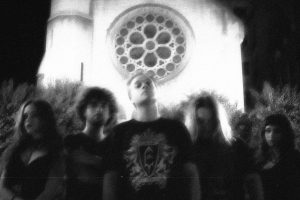
With The Distaff, Maud the Moth crafts an intricate sonic tapestry where history, trauma, and identity intertwine in ethereal yet visceral ways. Inspired by the ancient Greek poet Erinna, the album reflects on the weight of inherited trauma, the enduring struggles of women throughout history, and the fluidity of cultural identity. In this interview, we explore how the Spanish-born, Scotland-based artist weaves personal vulnerability into artistic expression, the influence of surrealist visionaries like Leonora Carrington and Tarkovsky on her work, and the urgent need for gender equity in music production. With deep introspection and raw honesty, Maud the Moth delves into the delicate balance between fragility and strength, tradition and defiance—creating a world that is both dreamlike and devastatingly real.
– Hi, first off thanks for answering our questions. How’s everything going? What are you currently up to?
Thanks to you guys! Currently finishing off all the album release admin and coordination (aka fun parts of album making) and starting rehearsals for all the 2025 shows.
– The distaff has historically symbolized the «virtuous woman» and is central to your album’s theme. How do you reinterpret this symbol in The Distaff, and what message do you aim to convey about traditional gender roles through your music?
I feel like gender expectations are at the core of many of the issues we face as a society and it is the source of incredible pain. In this album, I wanted to dig really deep into my own demons and detangle some of the inherited trauma by creating a dreamlike and symbolic world where the atmosphere tells the story. When I came across the poem by Erinna (by the same name as the album) many of the worries permeating her words more than 2000 years ago resonated very deeply with me, and I imagined this wooden utensil as a mythical tool around which trauma associated with the feminine had been spinning since the beginning of time—getting larger and more complex. I think it’s a very human mind-trick to give fears a physical entity, as a way of containing them or even, like I do in the album cover, severing myself from its tangle.
– Drawing inspiration from Erinna’s laments on lost power, how do you relate her ancient expressions of grief and loss to contemporary issues faced by women today?
Sadly, I still feel there’s so much of the path towards true equality left to walk. It seems to be ingrained in the worst parts of humanity that some individuals will abuse power and try to subject others to suit their interests. Segregating humans into different collectives to demonize them and turn them against each other continues to be the most effective method. I feel Erinna’s poem operates in the universal and timeless world of memory, which is why I feel it still speaks to us today. Rather than a socio-political essay—which I am not really equipped to produce—I wanted to bring attention to how incredibly complex, nuanced, and pervasive many of the issues faced by women are by recreating my internal world of memory as a snapshot of it in 2025.
– As a Spanish-born artist now based in Scotland, themes of rootlessness and identity permeate your work. How has your multicultural background influenced the sonic landscape of The Distaff, and in what ways does it address the complexities of cultural identity?
This is definitely a key aspect of my work, and I started exploring it a bit in my previous work Orphnē. Rather than a style that is designed, I feel that by allowing all the influences I have been exposed to in my life to emerge during the creative process, this background becomes apparent and shows the multi-faceted reality of cultural identity in a post-globalization world.
My grandfather was well-known in his village for his Castilian folk singing, and that has always been a strong influence on me as I grew up listening to and singing these songs with him and my mother (he can be heard singing at 95 or so years of age at the end of The Abattoir, Orphnē (2020)). I also studied classical piano and singing and would often recognize the cross-pollination between classical and folk, particularly from Spanish composers like Turina or Granados. As a teenager, I became passionate about rock, metal, and more experimental and heavier sounds, and I also recognized this emotion in the previously mentioned styles, to the point where musical genre no longer has meaning for me.

– Your music often intersects with various art forms. How have disciplines like visual arts or literature shaped the narrative of The Distaff, and can you highlight a specific work that significantly influenced this album?
I am a big fan of creators who focus on symbolism and atmospheric recreation, like Tarkovsky or David Lynch (obviously in very different styles). This aura of magical realism and subjective poetry makes the most sense to me from a creative viewpoint and reflects what I experience when listening to and creating music. I am also a huge fan of fantastic/surrealist women like Leonora Carrington (the title of song 4 in The Distaff is taken from one of her paintings), Remedios Varo (to whom my collaborative album with Trajedesaliva is dedicated), and contemporary all-round artist Dolorosa de la Cruz. Apart from the obvious Erinna influence, I love the poetry of Carolyn Forché, Lorca, William Blake, and Leopoldo María Panero.
– The album plunges into themes of trauma. How do you navigate the balance between personal vulnerability and artistic expression when addressing such intimate subjects in your compositions?
I have always used music, particularly sitting down at the piano and singing along, as a way to cope with life. How I ended up doing this on a stage or professionally often eludes me, to be honest! I like to think that people connect with it because there’s always some space for interpretation or even re-appropriation by the listener. My favorite painting by Remedios Varo is called The Creation of the Birds, and it depicts this exact thing—artworks as birds, coalesced by the artist, flying away from their desk the second they materialize.
– The Distaff exists in a world of «ethereal but violent aesthetic overlaps.» How do you musically represent this duality, and what emotions or reflections are you hoping to evoke in your listeners?
Some of the hardest and most terrifying issues entangled in human society are not obvious evils. Often people wonder how someone could endure domestic abuse for years or turn to self-harming strategies to cope. The reality is that life is incredibly complex, gaslighting and manipulation are everywhere, and if we are to move forward as a society, we really need to escape this bipolar idea of good vs. evil, or victim vs. aggressor. I think this is what I am trying to highlight with the sound of this album.
– In what ways does The Distaff mark an evolution from your previous album, Orphné, both thematically and musically? What new challenges or discoveries did you encounter during its creation?
The Distaff benefited from a LOT more experience in its approach, both from me and from Scott, and it was the first album where I have actually had an external set of ears to help me with the pre-production. My first three albums were 100% self-funded, meaning that I had a full-time non-music-related job to make them, and I wasn’t able to access the level of detail and dedication that I wanted because my human resources were just not enough.
I had a grant from Creative Scotland to cover some of the expenses of making this album, which was a monumental improvement in my working conditions, so I feel like I have finally made something that is close enough to my initial idea.
– Co-producing The Distaff with Scott McLean, how do you perceive the role of women in music production today? What challenges have you faced in this domain, and how do you advocate for greater female representation behind the scenes?
Women and other marginalised genders are still incredibly under-represented in the audio world. I studied Civil Engineer as my first degree and women would make around 30 to 40% of the classroom, with most of them later taking only studio work in an office rather than outdoors directing a work. The audio engineering world(which I explored later as I did an MSc and PhD in Musical Acoustics) is significantly worse. I have been at conferences where only 1% of the papers were authored by women and I was regularly tokenised by some institutions to “save face”. These same conferences would have sessions trying to address the gender imbalance of this discipline and, literally,onlythose 1% of women would attend. These types of issues are everybody’s problem and when privileged collectives ignore them, they perpetuate the deeper message of segregation. I now surround myself and work with people who understand this and actively fight to eradicate it regardless of their identity. I think that making underrepresented collectives aware of how they are minimised and allowing them to develop enough self-respect to develop assertiveness is the only way in which things can change.
– With the release of The Distaff, what new themes or concepts are you interested in exploring in your future projects? How do you envision the continued evolution of Maud the Moth’s artistic identity?
To be honest, I put so much into each album I make, that when I’m about to release one I can’t imagine myself ever make an album again or having anything left to say. I recognise this feeling though, and I know that more stuff will start bubbling up eventually. I am not interested in quantity, though. I only release music when I have something to express.
– That’s all from our side. Thanks again for answering these questions. If you’d like to add any final words, it’s your turn.
Thanks so much to you guys for all you do! Thanks for reading and listening to my music! Hopefully, see you at some of the upcoming shows!